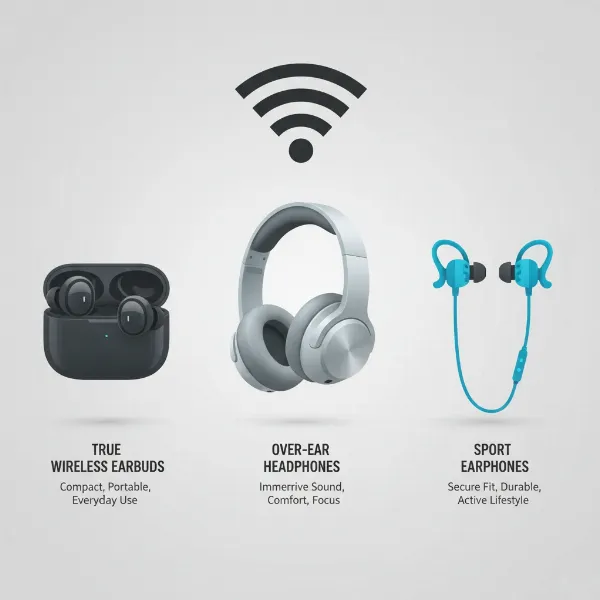
For gamers, the quest for the perfect audio setup is perpetual, often boiling down to a crucial dilemma: wireless earphones or traditional gaming headsets? With advancements in wireless technology, both options now offer compelling features for immersive gameplay and clear communication. Choosing between them isn’t just a matter of preference; it involves understanding the nuanced differences in performance, comfort, and functionality. This article will dissect the strengths and weaknesses of each, guiding you to an informed decision that elevates your gaming experience.
Pros and Cons of Wireless Earphones
Wireless earphones, especially true wireless stereo (TWS) models designed for gaming, have carved out a significant niche due to their unparalleled convenience and portability. These compact devices offer freedom from tangled wires and allow for discreet use in various environments. Modern gaming-specific earbuds often feature low-latency wireless connections, making them viable contenders for more than just mobile gaming.
Pros
- Exceptional Portability and Freedom: Their lightweight and compact design makes wireless earphones incredibly easy to carry anywhere, offering complete freedom of movement without cables.
- Discreet and Stylish Design: Wireless earphones are less conspicuous than bulky headsets, blending seamlessly into daily life.
- Versatile Connectivity: Many models offer both low-latency 2.4GHz wireless via a dongle for gaming and standard Bluetooth for mobile devices, enhancing their versatility.
- Active Noise Cancellation (ANC): High-end wireless gaming earbuds increasingly incorporate effective ANC, helping to isolate players from ambient distractions for focused gameplay.
|
Our Picks for the Best Wireless earphones in 2026
As an Amazon Associate I earn from qualifying purchases.
|
||
| Num | Product | Action |
|---|---|---|
| 1 | Apple AirPods 4 Wireless Earbuds, Bluetooth Headphones, Personalized Spatial Audio, Sweat and Water Resistant, USB-C Charging Case, H2 Chip, Up to 30 Hours of Battery Life, Effortless Setup for iPhone |

|
| 2 | Wireless Earbuds Bluetooth 5.4 Headphones, 50H Playtime Stereo Earphones with ENC Noise Cancelling, IPX7 Waterproof Open Ear Buds with Ergonomic Earhook for Fitness/Sports/Workouts/Travel (Black) |
|
| 3 | HAOYUYAN Wireless Earbuds, Sports Bluetooth Headphones, 80Hrs Playtime Ear Buds with LED Power Display, Noise Canceling Headset, IPX7 Waterproof Earphones for Workout/Running(Black) |
|
| 4 | KTGEE Wireless Earbuds Bluetooth 5.3 Headphones, 40Hrs Playback Stereo Ear Buds with LED Display Charging Case IPX7 Waterproof in-Ear Earphones with Mic for Phone Tablet Laptop Sports, White |
|
| 5 | TOZO A1 Wireless Earbuds, Bluetooth 5.3 Lightweight In-Ear Headphones, Deep Bass Stereo Sound, AI ENC Mics Clear Calls Ear Buds, IPX5 Waterproof Earphones, 32 Presets EQ Customization via App |
|
| 6 | Apple AirPods Pro 3 Wireless Earbuds, Active Noise Cancellation, Live Translation, Heart Rate Sensing, Hearing Aid Feature, Bluetooth Headphones, Spatial Audio, High-Fidelity Sound, USB-C Charging |
|
| 7 | Soundcore by Anker P20i True Wireless Earbuds, 10mm Drivers with Big Bass, Bluetooth 5.3, 30H Long Playtime, Water-Resistant, 2 Mics for AI Clear Calls, 22 Preset EQs, Customization via App |
|
| 8 | kurdene Wireless Earbuds Bluetooth Headphones Sport,Over Ear Buds with Deep Bass Sound,60Hrs Playtime Earphones Redesigned Comfort Fit with Earhooks for Running,Meeting,Workout-Black |
|
| 9 | JBL Vibe Beam - True Wireless JBL Deep Bass Sound Earbuds, Bluetooth 5.2, Water & Dust Resistant, Hands-Free Call with VoiceAware, Up to 32 Hours of Battery Life (Black) |
|
| 10 | Wireless Earbuds Bluetooth 5.4 Headphones, 54H Playtime Stereo Earphones with Noise Cancelling Mic, IPX7 Waterproof, Fast Charging and Comfort Fit Ear Buds for Fitness/Sports/Workouts/Travel Black |
|
Cons
- Limited Battery Life: While charging cases extend their total usage, individual earbud battery life is typically shorter than that of gaming headsets.
- Sound Immersion Limitations: Despite technological improvements, smaller drivers in earbuds generally struggle to match the expansive soundstage and deep bass of larger headset drivers, impacting overall immersion.
- Microphone Quality: Built-in microphones, while using advanced algorithms for noise filtering, often cannot compete with the clarity and directness of a dedicated boom mic on a headset.
- Comfort Variability: Comfort can be highly subjective and dependent on finding the perfect ear tip fit. Prolonged use can sometimes lead to ear canal fatigue or discomfort.
Pros and Cons of Gaming Headsets
Gaming headsets have long been the gold standard for serious gamers, renowned for their immersive audio, robust build, and superior communication capabilities. Wireless gaming headsets maintain these advantages while adding the convenience of cord-free play, making them a popular choice for home setups and competitive environments.
Pros
- Superior Sound Immersion: With larger drivers and over-ear designs, gaming headsets deliver a richer, fuller soundscape, often with virtual surround sound, which is critical for positional audio in competitive games.
- Excellent Microphone Performance: The inclusion of dedicated, often detachable, boom microphones ensures crystal-clear voice communication, vital for team-based multiplayer games.
- Enhanced Comfort for Extended Sessions: Padded headbands and cushioned earcups distribute weight evenly, making headsets exceptionally comfortable for marathon gaming sessions.
- Longer Battery Life: Due to their larger size, wireless gaming headsets can accommodate bigger batteries, offering significantly longer playtime on a single charge compared to earbuds.
Cons
- Bulky and Less Portable: Gaming headsets are considerably larger and heavier, making them less convenient for travel or on-the-go gaming.
- Heat and Pressure: The over-ear design can sometimes lead to heat buildup around the ears, and prolonged pressure can be uncomfortable for some users, especially those wearing glasses.
- Higher Price Point: Premium gaming headsets with advanced features and wireless capabilities can often be more expensive than many wireless earphones.
- Less Discreet: Their prominent design makes them unsuitable for discreet use in public or professional settings.
[image-1|gaming-headset-vs-earbuds-choice|A gamer contemplating between a sleek pair of wireless earphones and a robust gaming headset on a desk with a glowing PC setup.|
A gamer’s hands are hovering over two audio devices on a modern gaming desk: a pair of sleek, black true wireless gaming earbuds on one side and a large, padded, over-ear gaming headset with an attached boom mic on the other. The background shows a dimly lit gaming room with RGB lighting from a PC tower and monitor. The scene is viewed from a slightly elevated, eye-level angle, with soft, ambient lighting highlighting the products. The style is realistic and high-tech.]
Key Comparison Factors: Wireless Earphones vs. Gaming Headsets
The choice between wireless earphones and gaming headsets often hinges on specific factors that directly impact your gaming experience. Understanding these differences is crucial for selecting the audio gear that best suits your individual needs and playstyle.
Sound Quality & Immersion
Gaming headsets typically lead in delivering a more immersive soundscape, characterized by powerful bass, crisp highs, and detailed positional audio, thanks to their larger drivers (often 40-60mm) and ability to implement virtual surround sound technologies. This allows gamers to pinpoint enemy footsteps or distant gunfire with greater accuracy, providing a competitive edge. While gaming earbuds have made significant strides in audio fidelity, with some offering impressive clarity and punchy bass, their smaller form factor generally limits the depth and breadth of the soundstage compared to premium over-ear alternatives. The in-ear design of earbuds can provide good passive noise isolation, aiding immersion by blocking external sounds.
Microphone Performance
For team-based games requiring clear communication, the microphone quality is paramount. Gaming headsets, with their dedicated boom microphones, offer vastly superior voice clarity, often incorporating noise-canceling features that isolate the user’s voice from background noise. This ensures your teammates hear you without distortion or interference. Wireless earbuds, by contrast, rely on built-in microphones that use beamforming technology and algorithms to capture voice and filter ambient sound. While these have improved, they generally cannot match the directness and robust noise rejection of a physical boom mic, making them less ideal for serious competitive play.
Comfort & Design
Comfort is a subjective yet critical factor, especially during long gaming sessions. Gaming headsets are designed with ergonomic padding on earcups and headbands to distribute weight evenly, reducing pressure and allowing for hours of comfortable wear. However, their bulkier design can be an issue for some, particularly those who wear glasses, as the earcups might press the frames against the head. Wireless earbuds offer a lightweight and discreet alternative, applying minimal pressure to the head. Their comfort, however, is heavily dependent on the fit of the ear tips within the ear canal; an improper fit can lead to discomfort or instability over time.
Connectivity & Latency
Latency, the delay between on-screen action and audio output, is a critical concern for competitive gaming. Both wireless earphones and gaming headsets can achieve low latency, but the method is key. Standard Bluetooth connections often introduce noticeable lag, making them unsuitable for serious gaming. Dedicated low-latency 2.4GHz wireless connections, typically achieved via a USB dongle, are the preferred method for both headsets and high-end gaming earbuds for PC and console gaming. These connections ensure near real-time audio synchronization, crucial for responsive gameplay.
Battery Life
Gaming headsets generally boast significantly longer battery life on a single charge compared to wireless earbuds. Their larger physical size allows for bigger batteries, enabling upwards of 30-70 hours of continuous use for many models. Wireless earbuds, while offering 5-10 hours per charge, rely heavily on their portable charging cases to extend total playtime, necessitating regular recharges of the case itself. This makes headsets a more reliable choice for marathon gaming sessions without interruption.
Portability & Versatility
When it comes to portability, wireless earphones are the undisputed champions. Their small size makes them easy to slip into a pocket or bag, ideal for mobile gaming, travel, or switching between devices effortlessly. Gaming headsets, despite their wireless convenience, remain bulky and less practical for on-the-go scenarios. Earbuds also offer greater versatility for everyday use, seamlessly transitioning from gaming to music listening, calls, or workouts.
Noise Cancellation
Many high-end gaming headsets provide excellent noise isolation through their over-ear, closed-back design, which physically blocks external sounds. Additionally, many incorporate advanced Active Noise Cancellation (ANC) systems to further eliminate environmental distractions, creating a highly immersive bubble. Premium gaming earbuds are also increasingly featuring sophisticated ANC, using multiple microphones to effectively cancel out a broad range of frequencies. While earbuds may not match the comprehensive isolation of top-tier headsets, their ANC can be very effective in reducing ambient noise.
Feature Breakdown: Wireless Earphones vs. Gaming Headsets
To help visualize the distinct strengths of each audio category, here’s a direct comparison of their key attributes:
| Feature | Wireless Earphones (Gaming-Focused) | Gaming Headsets (Wireless) |
|---|---|---|
| Sound Immersion | Good, clear audio; improving soundstage | Excellent, expansive, positional audio |
| Microphone | Serviceable built-in mic, algorithms | Superior boom mic, crystal clear |
| Comfort | Lightweight, fit-dependent, ear fatigue | Excellent for long sessions, padded |
| Portability | Very High | Low (bulky, less travel-friendly) |
| Low Latency | Yes (with 2.4GHz dongle on specific models) | Yes (with 2.4GHz dongle) |
| Battery Life | Moderate (extended by charging case) | Long (larger integrated battery) |
| Noise Isolation | Good (passive, some ANC) | Excellent (passive, strong ANC) |
| Price Range | Mid to High | Wide (Entry-level to Premium) |
| Typical Use Case | Mobile gaming, casual gaming, versatile | Dedicated PC/console, competitive gaming |
[image-2|gamer-using-headset-earbuds-comparison|A side-by-side split image showing a gamer intensely focused with a gaming headset on one side, and another gamer using wireless earbuds on the other, both in gaming settings.|
A split image displaying two scenes. On the left, a gamer is wearing a large, over-ear gaming headset with a boom mic, seated at a high-end PC gaming setup with multiple monitors, immersed in a competitive game. The lighting is dynamic, reflecting the game’s intensity. On the right, another gamer is using compact true wireless gaming earbuds, looking focused on a portable gaming device (like a Steam Deck or Nintendo Switch) or a smartphone, possibly on a couch or during commute. The overall style is modern and realistic, highlighting the different contexts of use.]
Choosing Your Perfect Audio Gear: A Buying Guide
Selecting between wireless earphones and gaming headsets boils down to aligning their strengths with your personal gaming habits and priorities. Consider these factors to make the best choice for your setup.
Identify Your Primary Use
Start by clarifying your main gaming scenarios. Are you primarily a home-based PC or console gamer who enjoys long, immersive sessions and competitive multiplayer? A gaming headset is likely your ideal choice, offering superior audio and communication. If you frequently game on the go, prefer mobile gaming, or need a versatile audio device that transitions easily between gaming, music, and calls, then a pair of dedicated low-latency wireless earbuds would be more suitable. Consider if you need a single device for all your audio needs or if you’re willing to invest in specialized gear for different activities.
Prioritize Key Features
Your choice should reflect which performance aspects matter most to you.
- Microphone Clarity: For competitive multiplayer where clear team communication is non-negotiable, the dedicated boom mic of a gaming headset offers a significant advantage. If voice chat is secondary or occasional, gaming earbuds might suffice.
- Immersive Sound: For the deepest immersion, rich soundscapes, and precise positional audio in story-driven or competitive titles, gaming headsets typically provide a more comprehensive experience.
- Comfort for Long Sessions: If you play for many hours, the weight distribution and plush padding of a quality gaming headset are often unmatched. For those who find headsets too bulky or restrictive, especially with glasses, earbuds might offer a more comfortable alternative if the fit is right.
- Portability: For gamers who travel, commute, or switch between various devices and locations, the sheer portability and discreet nature of wireless earbuds are a major draw.
- Budget: Both categories span a wide range of prices. While entry-level options exist for both, high-performance wireless gaming earbuds can sometimes be as expensive as mid-range gaming headsets. Define your budget early to narrow down options.
Connectivity Considerations
For gaming, always prioritize devices that offer a 2.4GHz wireless connection via a USB dongle over standard Bluetooth. This dedicated wireless technology significantly reduces latency, ensuring that audio cues are perfectly synchronized with on-screen actions. Some premium gaming earbuds now integrate this technology, bridging the gap with headsets. Standard Bluetooth is generally fine for casual mobile gaming or listening to music, but its inherent latency can be a disadvantage in fast-paced titles.
Top Picks for Each Category
The market offers a diverse range of high-quality options for both wireless gaming headsets and gaming earbuds. Here are some of the most highly-regarded models that exemplify the best of what each category has to offer.
Top Wireless Gaming Headsets
- Razer BlackShark V2 HyperSpeed Wireless Esports Headset: Known for its ultra-lightweight design, powerful Razer TriForce Titanium 50mm drivers, and THX Spatial Audio, offering pinpoint positional awareness crucial for competitive gaming. It also boasts impressive battery life.
- SteelSeries Arctis Nova Pro Wireless: A premium choice featuring advanced ANC, multi-system connectivity, and an excellent retractable ClearCast Gen 2 mic. It’s designed for unparalleled audio quality and comfort over long sessions.
- HyperX Cloud Alpha Wireless: Offers an astounding battery life (up to 300 hours) and features dual-chamber drivers for impressive sound clarity, making it a favorite for marathon gamers.
Top Wireless Gaming Earbuds
- SteelSeries Arctis GameBuds: Designed specifically for gaming with a low-latency 2.4GHz wireless USB-C dongle for PCs, PlayStation, and Xbox. They also offer decent ANC and versatility for everyday use.
- Sony PULSE Explore Truly Wireless: These earbuds feature planar magnetic drivers for high-quality audio and offer very low wireless dongle latency, perfect for PS5 and PC gamers.
- PrismXR Vega T1 Low Latency Wireless Earbuds: Highlighted for its universal 2.4GHz dongle connectivity, ultra-low 25ms latency, and powerful bass, making them suitable for mobile, PC, and VR gaming.
- Razer Hammerhead HyperSpeed: Combines Bluetooth 5.2 with a 2.4GHz dongle for low-latency gaming across multiple platforms, offering convenience without compromising performance significantly.
[image-3|gamer-setup-audio-focus|A close-up, high-angle shot of a gaming desk, highlighting a pair of premium wireless gaming earbuds next to a compact USB dongle, with a blurred background of a modern gaming monitor showing a game UI.|
A close-up, high-angle shot focusing on a section of a clean, minimalist gaming desk. In the foreground, a sleek pair of premium true wireless gaming earbuds (e.g., SteelSeries Arctis GameBuds or Sony PULSE Explore) is placed next to a small, low-latency 2.4GHz USB-C dongle. The background is blurred but clearly shows a large, modern gaming monitor displaying an in-game UI or a vibrant game scene, suggesting active gameplay. The lighting is soft and even, highlighting the audio gear as the central focus. The style is modern, clean, and realistic.]
Conclusion
The debate between wireless earphones and gaming headsets isn’t about one being definitively superior, but rather which device aligns best with your individual gaming lifestyle and priorities. Gaming headsets continue to offer the pinnacle of immersive audio, unparalleled microphone clarity, and sustained comfort for dedicated home gaming sessions. Conversely, wireless earphones, particularly specialized gaming earbuds, excel in portability, versatility, and discreet use, with increasingly impressive low-latency performance.
Ultimately, the perfect choice hinges on your specific needs: do you prioritize the ultimate immersive experience and clear communication for competitive play at home, or do you value portability, convenience, and a versatile audio solution for gaming on the go? By carefully evaluating these factors, you can confidently select the wireless audio gear that enhances your enjoyment and performance in the digital realm. Which aspects of your gaming experience will guide your decision?
Frequently Asked Questions
Are wireless earbuds good for competitive gaming?
While traditional gaming headsets often provide an edge with superior soundstage and boom mics, specialized wireless gaming earbuds featuring low-latency 2.4GHz dongles and optimized audio profiles are increasingly viable for competitive gaming, especially for mobile or casual play where portability is key.
What is the most important feature for wireless gaming audio?
For wireless gaming audio, ultra-low latency is arguably the most critical feature. A connection that minimizes delay between game actions and audio cues (typically 2.4GHz wireless via a USB dongle, rather than standard Bluetooth) ensures responsiveness and immersion in fast-paced games.
Do gaming headsets work with mobile phones?
Many wireless gaming headsets offer dual connectivity, supporting both a 2.4GHz dongle for consoles/PC and Bluetooth for mobile devices. This allows them to function as versatile headphones for phone calls, music, and mobile gaming, though latency might be higher over standard Bluetooth.
Can wireless earphones replace a gaming headset for all types of games?
Wireless earphones can replace a gaming headset for many casual and mobile games, and even some PC/console titles if they feature a low-latency 2.4GHz dongle. However, for highly competitive games requiring precise positional audio and crystal-clear team communication, a dedicated gaming headset often remains the superior choice.