The choice between wireless earphones and traditional wired earbuds has become a perennial debate for audio enthusiasts and casual listeners alike. With an ever-expanding market flooded with innovative designs and cutting-edge technology, navigating this decision can feel overwhelming. This article, drawing on extensive experience in the audio landscape, will delve into the nuances of both wireless earphones and wired earbuds, dissecting their advantages and disadvantages, exploring the diverse types available, comparing leading brands, and ultimately guiding you to find the perfect audio companion that aligns with your lifestyle and budget.
Advantages and Disadvantages of Wireless Earphones
Wireless earphones offer a compelling blend of convenience and modern features, but they also come with their own set of limitations. Understanding these aspects is crucial for making an informed choice.
Advantages
|
Our Picks for the Best Wireless earphones in 2026
As an Amazon Associate I earn from qualifying purchases.
|
||
| Num | Product | Action |
|---|---|---|
| 1 | JBL Vibe Beam - True Wireless JBL Deep Bass Sound Earbuds, Bluetooth 5.2, Water & Dust Resistant, Hands-Free Call with VoiceAware, Up to 32 Hours of Battery Life (Black) |

|
| 2 | TOZO A1 Wireless Earbuds, Bluetooth 5.3 Lightweight In-Ear Headphones, Deep Bass Stereo Sound, AI ENC Mics Clear Calls Ear Buds, IPX5 Waterproof Earphones, 32 Presets EQ Customization via App |
|
| 3 | Wireless Earbuds Bluetooth 5.4 Headphones, 54H Playtime Stereo Earphones with Noise Cancelling Mic, IPX7 Waterproof, Fast Charging and Comfort Fit Ear Buds for Fitness/Sports/Workouts/Travel Black |
|
| 4 | KTGEE Wireless Earbuds Bluetooth 5.3 Headphones, 40Hrs Playback Stereo Ear Buds with LED Display Charging Case IPX7 Waterproof in-Ear Earphones with Mic for Phone Tablet Laptop Sports, White |
|
| 5 | Wireless Earbuds Bluetooth 5.4 Headphones, 50H Playtime Stereo Earphones with ENC Noise Cancelling, IPX7 Waterproof Open Ear Buds with Ergonomic Earhook for Fitness/Sports/Workouts/Travel (Black) |
|
| 6 | Apple AirPods 4 Wireless Earbuds, Bluetooth Headphones, Personalized Spatial Audio, Sweat and Water Resistant, USB-C Charging Case, H2 Chip, Up to 30 Hours of Battery Life, Effortless Setup for iPhone |
|
| 7 | HAOYUYAN Wireless Earbuds, Sports Bluetooth Headphones, 80Hrs Playtime Ear Buds with LED Power Display, Noise Canceling Headset, IPX7 Waterproof Earphones for Workout/Running(Black) |
|
| 8 | Apple AirPods Pro 3 Wireless Earbuds, Active Noise Cancellation, Live Translation, Heart Rate Sensing, Hearing Aid Feature, Bluetooth Headphones, Spatial Audio, High-Fidelity Sound, USB-C Charging |
|
| 9 | kurdene Wireless Earbuds Bluetooth Headphones Sport,Over Ear Buds with Deep Bass Sound,60Hrs Playtime Earphones Redesigned Comfort Fit with Earhooks for Running,Meeting,Workout-Black |
|
| 10 | Soundcore by Anker P20i True Wireless Earbuds, 10mm Drivers with Big Bass, Bluetooth 5.3, 30H Long Playtime, Water-Resistant, 2 Mics for AI Clear Calls, 22 Preset EQs, Customization via App |
|
The most significant appeal of wireless earphones lies in their inherent convenience and freedom of movement. Without the entanglement of cables, users can move uninhibited, whether exercising, commuting, or simply navigating daily tasks. This liberation from physical tethers allows for a truly immersive and unrestrictive audio experience.
Beyond mobility, wireless earphones often boast a compact and fashionable design. True Wireless Stereo (TWS) earbuds, in particular, are incredibly discreet, fitting snugly within the ear without any visible wires. Many models also feature sleek aesthetics that complement personal style, transforming them into a modern accessory.
Furthermore, these devices offer fast and stable connectivity, primarily through advancements in Bluetooth technology. Pairing is often instantaneous with compatible devices, and the latest Bluetooth versions ensure a reliable connection with minimal dropouts, making for a seamless listening experience.
Modern wireless earphones are also packed with advanced features that enhance usability and sound quality. This includes highly effective active noise cancellation (ANC) to block out distractions, transparent modes that allow ambient sounds in for safety, intuitive voice controls, and often companion apps for personalized sound adjustments and updates.
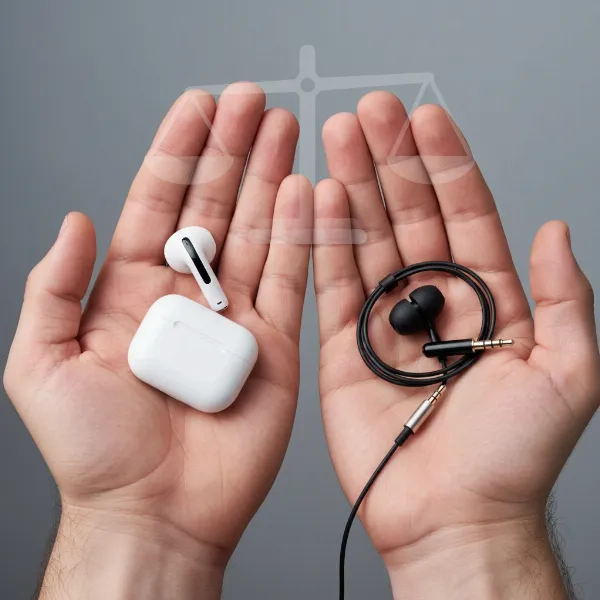 A person weighing wireless earbuds against wired earbuds, contemplating convenience vs. sound quality.
Disadvantages
Despite their numerous benefits, wireless earphones do present some drawbacks. One of the most common concerns is limited battery life. While charging cases extend listening times significantly, the earbuds themselves require periodic recharging, which can be inconvenient for extended, uninterrupted use, especially when compared to wired options that draw power directly from the source.
When it comes to sound quality, wireless earphones may not always rival high-end wired counterparts, particularly for audiophiles. Although Bluetooth audio codecs have advanced considerably, the compression involved can still lead to a subtle loss of detail compared to a direct analog connection, where the full audio signal is transmitted without digital conversion or compression.
Another practical disadvantage is their susceptibility to being lost or misplaced. The small, independent nature of true wireless earbuds makes them easy to drop or misplace, particularly during activities. The absence of a connecting wire means that if one earbud falls out, it can be hard to track.
Finally, the price point of wireless earphones is often higher than similarly performing wired models. The integration of batteries, Bluetooth chips, advanced processing, and sophisticated charging mechanisms contributes to a greater manufacturing cost, which is reflected in the retail price.
Types of Wireless Earphones
The wireless audio market has diversified, offering several distinct types of earphones to cater to different user preferences and activities. Each category has unique characteristics in terms of design, performance, and application.
True Wireless Stereo (TWS) Earphones
True Wireless Stereo (TWS) earphones represent the pinnacle of wire-free design. These devices are completely independent of each other and connect wirelessly to your source device. Their completely wireless, compact design makes them incredibly portable and unobtrusive, perfect for slipping into a pocket or bag. They are easy to carry and use, typically activating and pairing as soon as they are removed from their charging case. Their secure fit and lack of cables also make them ideal for sports activities and on-the-go use, offering maximum freedom of movement during workouts or commutes.
Wireless Over-Ear Headphones
Wireless over-ear headphones envelop the entire ear, providing a different listening experience. They generally offer superior sound quality due to larger drivers and better acoustic sealing, which also contributes to passive noise isolation. These headphones typically feature longer battery life compared to earbuds, often providing dozens of hours of playback on a single charge. Many users find them comfortable for extended wear, as the earcups distribute pressure evenly around the ear, making them suitable for long flights, work sessions, or immersive home listening.
Wireless Sport Earphones
Designed specifically for active individuals, wireless sport earphones prioritize durability and a secure fit. Their construction often includes water and sweat resistance ratings, making them robust enough to withstand intense workouts and outdoor elements. They are engineered for a snug and stable fit during physical activity, often featuring ear hooks, wingtips, or neckbands to prevent them from falling out during rigorous motion. This makes them highly suitable for various sports activities, from running and cycling to gym sessions, where reliability and comfort under duress are paramount.
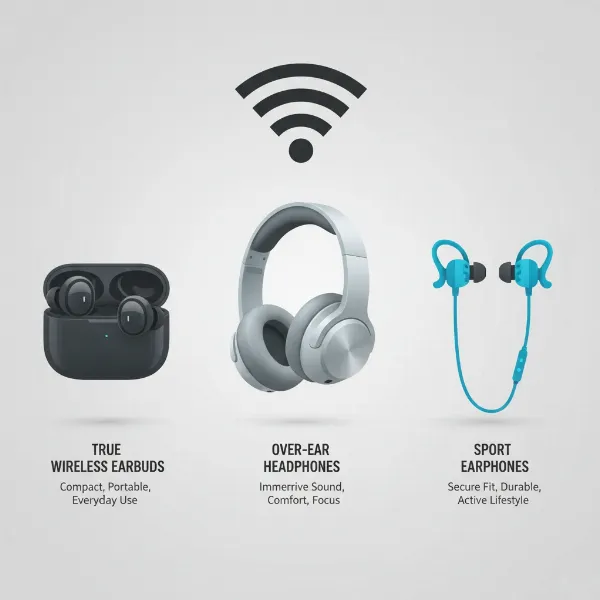 An infographic illustrating different types of wireless earphones like true wireless, over-ear, and sport.
Comparing Popular Wireless Earphone Brands
The market for wireless earphones is highly competitive, with numerous brands offering a wide array of products. Here’s a comparison of some of the most well-known players and their signature offerings.
Comparison Table
| Brand | Advantages | Disadvantages | Estimated Price Range (USD) |
|---|---|---|---|
| Apple AirPods | Seamless integration with Apple ecosystem, intuitive controls, excellent voice call quality, spatial audio. | Higher price, average sound quality (non-Pro), limited customization outside Apple devices. | $129 – $249 |
| Sony | Exceptional sound quality, industry-leading noise cancellation, rich feature set, comfortable design. | Premium price, design can be bulky for some, specific app required for full features. | $199 – $399 |
| Samsung | Strong integration with Samsung Galaxy devices, competitive pricing, good feature set (ANC, ambient sound). | Sound quality may not match Sony’s top tier, fit might vary for users, battery life can be average. | $99 – $229 |
| Jabra | Durable and robust designs (often with high IP ratings), excellent call quality, good for sports/active use. | Sound profile may be less refined than audiophile brands, less premium feel, specific app required. | $79 – $199 |
| Anker Soundcore | Excellent value for money, strong battery life, good feature-to-price ratio, diverse product range. | Sound quality can be inconsistent across models, less premium build materials, brand recognition is lower. | $49 – $149 |
“The true value of a wireless earphone often extends beyond its audio fidelity; it’s about how seamlessly it integrates into your daily life and meets your specific needs, from active noise cancellation during commutes to crystal-clear calls on the go.” – Dr. Alistair Finch, Audio Technology Consultant.
 A dynamic graphic representing a comparison between multiple leading wireless earphone brands with their unique features highlighted.
How to Choose the Best Wireless Earphones (Buying Guide)
Selecting the ideal pair of wireless earphones requires a clear understanding of your personal requirements and an evaluation of various technical specifications.
Determine Your Usage Needs
Before diving into features, consider how you intend to use your earphones. What is your primary purpose for using earphones? Are you mainly listening to music during daily commutes, watching movies on a tablet, engaging in intense gaming sessions, making frequent calls, or using them specifically for sports and workouts? Your answer will significantly narrow down your options. Next, what specific features do you require? This might include active noise cancellation (ANC) for quiet environments, transparency/ambient sound mode for awareness, voice control for hands-free operation, or waterproofing for outdoor activities. Lastly, what is your budget? Setting a realistic price range will help you focus on models that fit your financial constraints.
Key Factors to Consider
Several critical factors influence the performance and suitability of wireless earphones. Sound quality is paramount for many, so assess aspects like bass depth, treble clarity, and overall detail. Audiophiles might prioritize codecs like LDAC or aptX Adaptive, while casual listeners might find standard AAC or SBC sufficient. Battery life is another significant consideration; ensure the combined battery life of the earbuds and their charging case meets your typical usage patterns, especially for long trips or extended workdays.
Design impacts both comfort and style. Look for an ergonomic fit that feels secure and comfortable for prolonged periods, and choose a style (in-ear, over-ear) that matches your aesthetic preference. Connectivity largely depends on Bluetooth versions; Bluetooth 5.0 and above offer more stable connections, longer range, and better power efficiency. Consider features like multi-point pairing if you switch between devices frequently.
Finally, evaluate additional features such as robust active noise cancellation, customizable EQ settings via an app, water and dust resistance ratings (IPX for sweat/rain), and the presence of low-latency modes for gaming or video. Researching the brand’s reputation for reliability, customer support, and warranty policies is also a wise step, as a trusted brand often provides peace of mind.
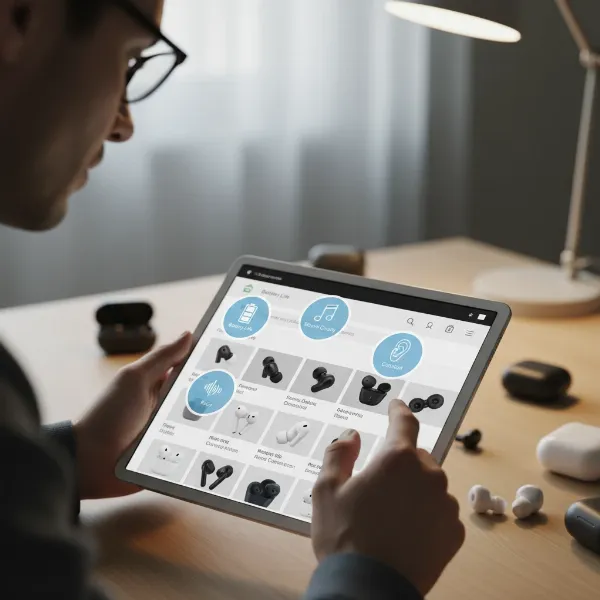 A person making an informed decision, looking at different earphone options, guided by key features.
Top Wireless Earphone Models in Demand Today
The market for wireless earphones is constantly evolving, with new models introducing enhanced features and improved performance. Here are some of the most highly-regarded and popular models currently available.
Leading Models and Their Strengths
- Apple AirPods Pro (2nd Generation): Renowned for their exceptional integration within the Apple ecosystem, the latest AirPods Pro offer superb active noise cancellation, an impressive transparency mode, and adaptive audio features. They deliver spatial audio for an immersive listening experience and boast crystal-clear call quality, making them a top choice for iPhone users seeking premium features and convenience.
- Sony WF-1000XM5: As Sony’s flagship true wireless earbuds, the WF-1000XM5 are celebrated for their class-leading sound quality, delivering rich detail and powerful bass, especially with their improved DSEE Extreme upscaling engine. They feature industry-best active noise cancellation, a comfortable and refined design, and robust battery life, appealing to audiophiles and those prioritizing immersive listening.
- Samsung Galaxy Buds2 Pro: These earbuds are a strong contender, particularly for Samsung Galaxy users, offering seamless integration and advanced features like 24-bit Hi-Fi audio when paired with compatible Samsung devices. They provide effective active noise cancellation, a comfortable fit, and clear voice calls, all wrapped in a sleek, compact design that’s perfect for everyday use.
- Jabra Elite 7 Active: Built for durability and performance during workouts, the Jabra Elite 7 Active earbuds boast an IP57 rating for dust and water resistance and a secure, comfortable fit thanks to their ShakeGrip coating. They offer strong active noise cancellation, good sound quality, and excellent call performance, making them ideal for athletes and active individuals who need reliable audio on the go.
- Anker Soundcore Liberty 4 NC: Representing exceptional value, the Soundcore Liberty 4 NC offers robust active noise cancellation that rivals more expensive models, coupled with an impressive battery life and a detailed sound profile. With a comfortable design and customizable EQ settings through their companion app, these earbuds provide a premium experience without the premium price tag.
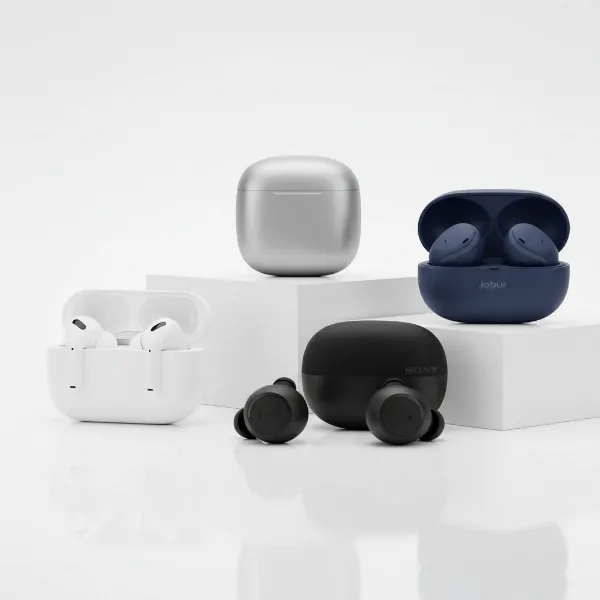 A collage or lineup of the top-rated wireless earphone models mentioned, showcasing their designs.
Conclusion
Choosing between wireless earphones and wired earbuds ultimately comes down to a nuanced balance of your personal priorities, lifestyle, and budget. While wired earbuds still hold an edge for pure, uncompressed audio fidelity and an uninterrupted power supply, the unparalleled convenience, advanced features, and freedom of movement offered by modern wireless earphones make them an increasingly popular and compelling choice. Whether you prioritize cutting-edge noise cancellation, seamless smart device integration, or robust durability for an active lifestyle, the market offers a diverse range of wireless options to meet virtually any need. By carefully considering your usage, evaluating key features, and exploring reputable brands, you can confidently navigate the audio landscape and find the perfect wireless companion. What features are most crucial for your next pair of wireless earphones?
Câu Hỏi Thường Gặp
Are wireless earphones better than wired earbuds for sound quality?
While high-end wired earbuds often offer superior, uncompressed audio fidelity, modern wireless earphones have significantly closed the gap with advanced codecs and digital processing. For most casual listeners, the sound quality of premium wireless models is excellent, though audiophiles may still prefer wired for critical listening.
Do wireless earphones have latency issues for gaming or videos?
Older wireless models could suffer from noticeable latency, but newer wireless earphones, especially those with low-latency modes or advanced Bluetooth codecs (like aptX Low Latency), have greatly reduced this. For competitive gaming, wired connections remain optimal, but for casual gaming and video watching, latency is rarely an issue.
How long do wireless earphone batteries typically last?
Battery life varies widely by model and usage, but most true wireless earbuds offer 5-9 hours of playback on a single charge, with their charging cases providing an additional 2-4 full charges. Over-ear wireless headphones typically offer much longer battery lives, often ranging from 20 to 40 hours.
Can I use wireless earphones with any device?
Most wireless earphones use Bluetooth technology, making them broadly compatible with any Bluetooth-enabled device, including smartphones, tablets, laptops, and smart TVs. Some specific features, like fast pairing or spatial audio, might be optimized for particular ecosystems (e.g., Apple AirPods with Apple devices).
Are wireless sport earphones truly waterproof?
Many wireless sport earphones offer various levels of water and sweat resistance, indicated by an IPX rating (e.g., IPX4, IPX7). An IPX4 rating can handle splashes and sweat, while higher ratings like IPX7 signify they can be submerged in shallow water for a short period. It’s crucial to check the specific IP rating of a model before using it near water.
What is Active Noise Cancellation (ANC)?
Active Noise Cancellation (ANC) is a technology found in many wireless earphones that uses microphones to detect ambient noise and then generates an “anti-noise” sound wave to cancel it out. This significantly reduces distractions from external sounds like engine hums, air conditioning, or crowd chatter, providing a quieter listening experience.
Is it worth paying more for premium wireless earphones?
For many users, investing in premium wireless earphones is worthwhile due to enhanced sound quality, superior active noise cancellation, more comfortable designs, better battery life, and access to advanced features like spatial audio or robust app customization. The added cost often translates to a significantly improved overall user experience and greater durability.