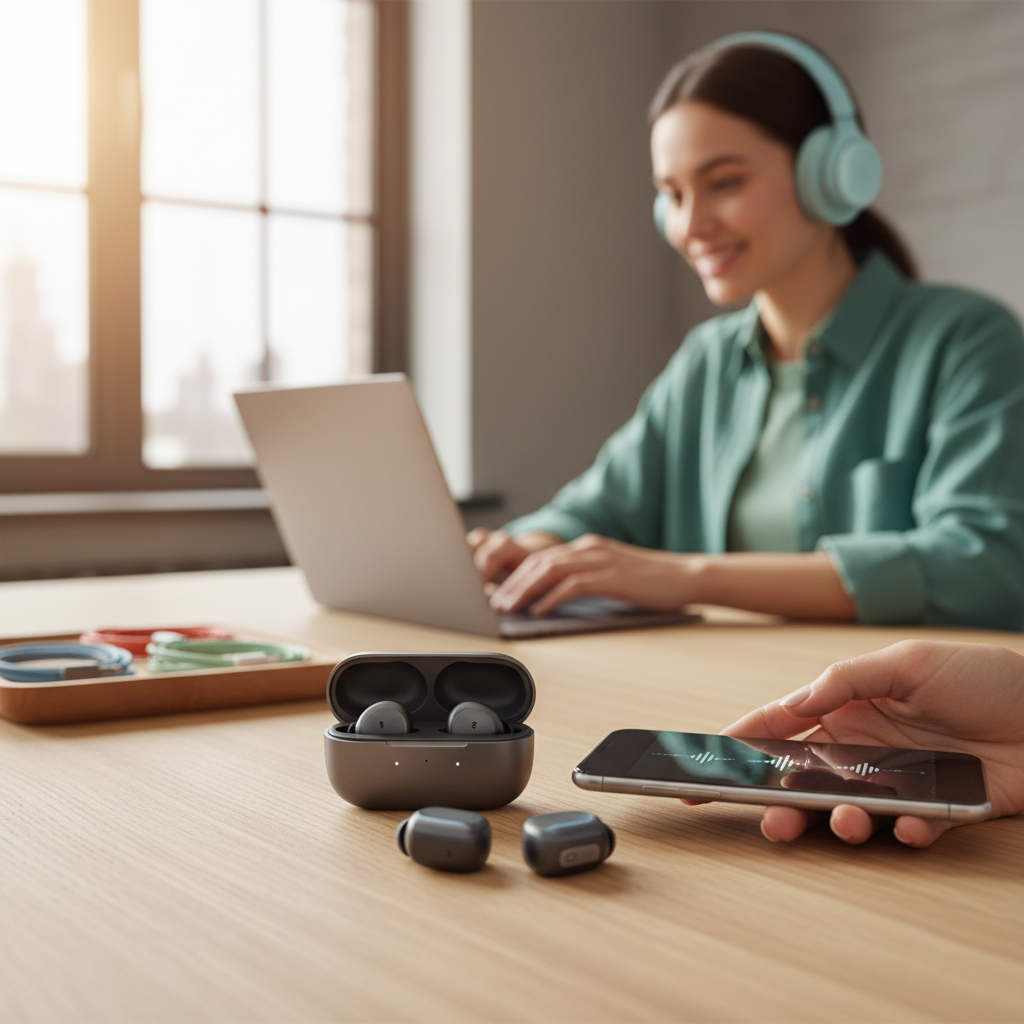
In the dynamic world of personal audio, two titans stand out as popular choices: wireless earphones and in-ear monitors (IEMs). While both deliver sound directly to your ears, they cater to distinct needs and preferences, offering unique advantages and trade-offs. Choosing between them isn’t about finding a universally “better” option, but rather identifying the perfect fit for your lifestyle, listening habits, and priorities. Whether you’re a casual listener seeking ultimate convenience, a fitness enthusiast needing untethered freedom, or an audiophile craving pristine sound, understanding the core differences between these devices is crucial. This comprehensive guide will dissect each category, compare their strengths and weaknesses, and help you navigate the soundscape to find your ideal audio companion.
Understanding Wireless Earphones
Wireless earphones have revolutionized how we consume audio, liberating us from the tangles and constraints of traditional cables. They represent the epitome of convenience, seamlessly integrating into our daily routines. From bustling commutes to intense workouts, these devices offer a blend of portability and smart features that have made them a mainstream favorite.
Advantages of Wireless Earphones
|
Our Picks for the Best Wireless earphones in 2026
As an Amazon Associate I earn from qualifying purchases.
|
||
| Num | Product | Action |
|---|---|---|
| 1 | Wireless Earbuds Bluetooth 5.4 Headphones, 50H Playtime Stereo Earphones with ENC Noise Cancelling, IPX7 Waterproof Open Ear Buds with Ergonomic Earhook for Fitness/Sports/Workouts/Travel (Black) |

|
| 2 | Apple AirPods Pro 3 Wireless Earbuds, Active Noise Cancellation, Live Translation, Heart Rate Sensing, Hearing Aid Feature, Bluetooth Headphones, Spatial Audio, High-Fidelity Sound, USB-C Charging |
|
| 3 | KTGEE Wireless Earbuds Bluetooth 5.3 Headphones, 40Hrs Playback Stereo Ear Buds with LED Display Charging Case IPX7 Waterproof in-Ear Earphones with Mic for Phone Tablet Laptop Sports, White |
|
| 4 | Soundcore by Anker P20i True Wireless Earbuds, 10mm Drivers with Big Bass, Bluetooth 5.3, 30H Long Playtime, Water-Resistant, 2 Mics for AI Clear Calls, 22 Preset EQs, Customization via App |
|
| 5 | Apple AirPods 4 Wireless Earbuds, Bluetooth Headphones, Personalized Spatial Audio, Sweat and Water Resistant, USB-C Charging Case, H2 Chip, Up to 30 Hours of Battery Life, Effortless Setup for iPhone |
|
| 6 | kurdene Wireless Earbuds Bluetooth Headphones Sport,Over Ear Buds with Deep Bass Sound,60Hrs Playtime Earphones Redesigned Comfort Fit with Earhooks for Running,Meeting,Workout-Black |
|
| 7 | JBL Vibe Beam - True Wireless JBL Deep Bass Sound Earbuds, Bluetooth 5.2, Water & Dust Resistant, Hands-Free Call with VoiceAware, Up to 32 Hours of Battery Life (Black) |
|
| 8 | Wireless Earbuds Bluetooth 5.4 Headphones, 54H Playtime Stereo Earphones with Noise Cancelling Mic, IPX7 Waterproof, Fast Charging and Comfort Fit Ear Buds for Fitness/Sports/Workouts/Travel Black |
|
| 9 | HAOYUYAN Wireless Earbuds, Sports Bluetooth Headphones, 80Hrs Playtime Ear Buds with LED Power Display, Noise Canceling Headset, IPX7 Waterproof Earphones for Workout/Running(Black) |
|
| 10 | TOZO A1 Wireless Earbuds, Bluetooth 5.3 Lightweight In-Ear Headphones, Deep Bass Stereo Sound, AI ENC Mics Clear Calls Ear Buds, IPX5 Waterproof Earphones, 32 Presets EQ Customization via App |
|
Wireless earphones shine in their ability to offer unparalleled freedom. Their cord-free design means no more tangled wires, allowing for unrestricted movement whether you’re jogging, commuting, or simply moving around your home. They are inherently compact and stylish, often designed to be discreet and complement modern aesthetics, making them a fashionable accessory. Connecting them is typically a fast and stable process thanks to advanced Bluetooth technology, pairing effortlessly with smartphones, tablets, and laptops. Beyond basic audio, many models boast modern features such as active noise cancellation (ANC) to silence distractions, transparency modes to stay aware of surroundings, and voice control for hands-free operation, transforming them into multi-functional smart devices.
Disadvantages of Wireless Earphones
Despite their allure, wireless earphones come with certain limitations. The most prominent is limited battery life, meaning they require regular recharging, and the charging case itself needs power. For critical listeners, the sound quality may not always match that of premium wired in-ear monitors, especially concerning detail and a flat frequency response. Their small size, while convenient, also makes them prone to being lost or misplaced. Furthermore, their price point is often higher than comparable wired alternatives due to the integrated technology, batteries, and advanced features.
[image-1|wireless-earphones-daily-use|Wireless earphones in use by a person commuting on a train, showcasing convenience and active noise cancellation|
A close-up shot of a diverse person wearing sleek, modern wireless earphones while looking out a train window during a busy commute. The focus is on the earphone design and the user’s relaxed expression, suggesting effective noise cancellation. Soft, natural lighting from the window. Realistic, editorial style.]
Understanding In-Ear Monitors (IEMs)
In-Ear Monitors (IEMs) occupy a more specialized niche in the audio world, primarily championed by audiophiles, musicians, and audio professionals. Unlike their wireless counterparts, IEMs prioritize uncompromised sound fidelity and isolation above all else, often favoring a wired connection to achieve peak performance.
Advantages of In-Ear Monitors
The core strength of IEMs lies in their superior sound fidelity and detail. Designed for critical listening, they offer exceptional audio clarity, precise soundstage imaging, and an uncolored frequency response, allowing users to hear every nuance in their music or mix. They provide excellent passive noise isolation, effectively sealing off the ear canal to block external sounds, which is crucial for musicians on stage or audiophiles seeking an immersive experience. Many IEMs are built with durability and robustness in mind, featuring replaceable cables and sturdy housings, making them reliable tools for professional use. Their wired nature ensures low latency, making them ideal for musicians monitoring live performances or audio engineers in the studio where any delay is unacceptable.
Disadvantages of In-Ear Monitors
The primary drawback for many is that IEMs are often wired, which, while delivering pristine audio, sacrifices the freedom of movement that wireless earphones provide. High-end and custom-molded IEMs can be significantly expensive, representing a substantial investment for serious users. Achieving optimal sound and comfort with IEMs requires a proper fit; universal models rely on a variety of ear tips, while custom-molded options demand an ear impression. Compared to wireless earphones, IEMs generally offer fewer “smart” features, focusing solely on delivering the best audio experience rather than integrating ANC, voice assistants, or touch controls.
[image-2|in-ear-monitors-studio-setup|Professional musician wearing wired in-ear monitors in a recording studio environment, focusing on sound quality|
A male musician with a focused expression, wearing professional wired in-ear monitors while sitting at a mixing console in a dimly lit recording studio. The IEM cable is visible, connected to a small personal monitor pack. Soft, warm studio lighting. Realistic, detailed, and professional photographic style.]
Key Differences: Wireless Earphones vs. In-Ear Monitors
While both devices deliver sound, their design philosophies and target audiences create fundamental differences across several key aspects. Understanding these distinctions is crucial for making an informed decision.
Sound Quality and Fidelity
This is often the battleground where IEMs truly shine. In-ear monitors, especially higher-end wired models, are engineered for uncompromised audio reproduction, delivering flatter frequency responses, superior detail retrieval, and a more expansive soundstage. They excel at revealing the subtle textures and nuances in music. Wireless earphones have made significant strides in sound quality, with some premium models offering impressive audio. However, they are still limited by Bluetooth codec capabilities and often prioritize a consumer-friendly, bass-forward sound signature over pure neutrality. For critical listening or professional monitoring, IEMs typically hold the upper hand.
Portability and Convenience
Here, wireless earphones are the undisputed champions. Their complete lack of wires means unparalleled freedom of movement, making them perfect for on-the-go lifestyles, exercise, and casual listening without any snagging or tangling. IEMs, particularly wired ones, offer good portability in terms of size, but the presence of a cable can be less convenient for some users. While wireless IEMs exist, they often come at a premium and still involve a form factor that might not be as discreet as true wireless earbuds.
Features and Technology
Wireless earphones are often packed with modern technological features designed to enhance user experience. These include active noise cancellation (ANC) to block out ambient sounds, transparency mode to hear your surroundings, integrated voice assistants, intuitive touch controls, and often companion apps for customization. IEMs, on the other hand, are typically more stripped-down, focusing solely on audio performance. Their “features” usually revolve around high-quality drivers, advanced cross-overs, and durable, modular designs with replaceable cables, rather than smart connectivity or noise-canceling electronics.
Latency and Connectivity
For applications where timing is critical, such as live monitoring for musicians or competitive gaming, IEMs (especially wired ones) offer virtually zero latency. The direct wired connection ensures that audio signals are transmitted instantaneously. Wireless earphones, despite advancements in Bluetooth technology (like aptX Low Latency), still introduce a slight, though often imperceptible for casual listening, delay. This latency can become noticeable in scenarios requiring perfect synchronization between audio and video or immediate feedback for performers.
Comfort and Fit
Both types of devices aim for comfortable and secure fits, but their approaches differ. Wireless earphones come in various designs (earbuds, in-ear with silicone tips) and rely on universal sizing. Getting a good seal is important for sound and ANC performance. IEMs, particularly custom-molded IEMs, offer the ultimate in personalized comfort and seal by precisely matching the contours of the wearer’s ear canal. This not only provides exceptional passive noise isolation but also ensures a secure fit even during vigorous movement. Universal IEMs offer a range of tips for an individualized fit.
Price and Value
Both categories span a wide price range. You can find budget-friendly wireless earphones and premium models costing several hundred dollars. Similarly, IEMs range from entry-level options to ultra-high-end custom units that can run into thousands. Generally, for comparable sound quality, a wired IEM might offer more value at a lower price point than a wireless earphone due to the absence of expensive wireless components and batteries. However, the “value” often hinges on the user’s primary needs – convenience for wireless, or fidelity for IEMs.
Comparing Popular Brands and Models
Understanding the general differences is one thing, but exploring specific examples helps solidify the unique propositions of both wireless earphones and in-ear monitors.
Table Comparison
| Category | Wireless Earphones (e.g., Apple AirPods Pro) | In-Ear Monitors (e.g., Shure SE215) |
|---|---|---|
| Primary Focus | Convenience, smart features, casual listening | Sound fidelity, isolation, critical listening |
| Connectivity | Bluetooth (true wireless) | Wired (typically 3.5mm; 2-pin/MMCX for detachable cables) |
| Noise Reduction | Active Noise Cancellation (ANC) | Passive Noise Isolation (PNC) |
| Latency | Potentially noticeable (Bluetooth-dependent) | Negligible (wired connection) |
| Portability | Excellent; compact, pocketable charging case | Good; compact, but wires can be a minor hassle |
| Battery Life | Limited (requires charging case for recharges) | Unlimited (no battery required) |
| Typical Use | Commuting, exercise, calls, casual music/podcast | Stage monitoring, studio work, audiophile listening |
| High-End Price | $200-$400 USD | $200-$2000+ USD (for custom-molded units) |
Top Models in Each Category
In the realm of wireless earphones, top contenders like the Apple AirPods Pro offer seamless integration with Apple ecosystems, impressive ANC, and a balanced sound profile. The Sony WF-1000XM5 stands out for its industry-leading noise cancellation and exceptional audio quality, making it a favorite for commuters and travelers. For Samsung users, the Samsung Galaxy Buds2 Pro provides excellent integration, rich sound, and a comfortable fit.
For those seeking the precision of in-ear monitors, the Shure SE846 is a long-standing audiophile favorite, known for its quad-driver design and detailed, customizable sound signature. The Sennheiser IE 600 offers superb neutrality and clarity, appealing to purists who want to hear music exactly as intended. Meanwhile, brands like Campfire Audio Andromeda are celebrated for their boutique designs and incredibly spacious, accurate sound reproduction, often favored by serious audiophiles for their unique acoustic properties.
“The true distinction isn’t just about cables, it’s about purpose. Wireless earphones are built for the rhythm of modern life, while IEMs are crafted for the soul of the music itself.” – Dr. Elena Petrova, Audio Engineering Specialist
Choosing Between Wireless Earphones and In-Ear Monitors
Making the right choice involves a clear understanding of your personal priorities. There’s no universal “best” device; only the best device for you.
Define Your Primary Use Case
Begin by asking yourself: What is your main purpose for these audio devices? If you primarily need hassle-free audio for commuting, exercising, making calls, or casual background listening, wireless earphones will likely be your preferred choice due to their convenience and smart features. However, if your needs lean towards professional stage monitoring, critical studio work, competitive gaming, or deep, analytical audiophile listening, the superior fidelity and isolation of IEMs will be indispensable. Consider whether you need specific features like robust waterproofing for intense workouts, or the utmost sound accuracy for mixing tracks. Your budget will also play a significant role, as high-end options in both categories can be substantial investments.
Factors to Consider
Several key elements should guide your decision. First, think about the sound signature you prefer: do you want a neutral, accurate sound (often found in IEMs), or a more consumer-friendly, bass-emphasized profile (common in wireless earphones)? Next, evaluate your noise reduction needs: do you prefer the active noise cancellation of wireless earphones to electronically silence your surroundings, or the passive noise isolation of IEMs that physically block sound? The trade-off between portability and performance is also crucial; how much does wireless convenience matter to you compared to uncompromised audio fidelity? Finally, always consider brand reputation and support to ensure you’re investing in a reliable product with good customer service and warranty.
Conclusion
The choice between wireless earphones and in-ear monitors ultimately hinges on your unique priorities. Wireless earphones offer unmatched convenience, smart features, and a liberating, cable-free experience perfect for the demands of daily life. They excel in versatility, active noise cancellation, and seamless integration into our connected world. Conversely, in-ear monitors deliver superior sound fidelity, exceptional passive noise isolation, and robust construction, making them the preferred choice for audiophiles, musicians, and anyone for whom audio purity and precision are paramount.
While wireless earphones represent the evolution of convenience, IEMs continue to push the boundaries of acoustic performance. There’s a perfect listening device for everyone; it’s simply a matter of identifying which category aligns best with your needs and what you value most in your personal audio experience. What specific features are you looking for to make your next audio purchase truly perfect?
Frequently Asked Questions
Are In-Ear Monitors better than wireless earphones for sound quality?
Generally, yes, high-quality wired In-Ear Monitors often surpass wireless earphones in terms of pure sound fidelity, detail retrieval, and accurate soundstage due to their direct connection and specialized drivers. Wireless earphones are improving rapidly, but inherent limitations of Bluetooth codecs and onboard processing can still introduce subtle compromises for the most discerning listeners.
Can I use wireless earphones for professional audio monitoring?
While modern wireless earphones offer impressive features like ANC and good sound, they are generally not recommended for professional audio monitoring due to potential audio latency and the prioritization of consumer features over absolute sound accuracy and a flat frequency response. Wired IEMs are the industry standard for their low latency and precise audio.
Which is better for working out, wireless earphones or IEMs?
Wireless earphones are typically better suited for working out. Their cable-free design offers maximum freedom of movement, and many models feature sweat resistance, secure fits, and quick controls that are highly beneficial during physical activity. Wired IEMs can be cumbersome with cables, and while some are durable, they aren’t primarily designed for vigorous exercise.
What are the main advantages of custom-molded IEMs?
Custom-molded IEMs offer unparalleled passive noise isolation and an exceptionally comfortable, secure fit because they are individually shaped to the wearer’s ear canals. This personalized fit results in optimal sound delivery and prevents fatigue during long listening sessions, making them a top choice for professional musicians and serious audiophiles.
Do wireless earphones have noticeable audio latency?
Modern wireless earphones use advanced Bluetooth codecs to minimize latency, making it often unnoticeable for casual listening or watching videos. However, for highly time-sensitive activities like gaming, producing music, or professional monitoring, even minor latency can be perceptible and disruptive. Wired IEMs offer virtually zero latency, making them ideal for these applications.